Wildfire smoke damage cleanup in California (2026): ash, soot & toxic residue
If a wildfire burned anywhere near your neighborhood, the danger doesn't end when the smoke clears from the sky. It moves indoors. The fine residue coating your countertops, settling in your air ducts, and soaking into your drywall is not ordinary dust - it's a chemical fingerprint of everything that burned: homes, cars, electronics, treated lumber, plastics. You can't always see it. You may not even smell it after a few weeks. But it's still there, and it can keep your family breathing unsafe air for months. This guide explains exactly what wildfire smoke leaves behind, what real cleanup involves, what it costs in California in 2026, and how to protect your home before the next fire season. If you're staring at a hazy film on your windows right now, talk to a certified expert before you touch anything.
Why wildfire smoke is more dangerous than it looks #
Here's the part most homeowners don't realize: when a wildfire burns through a populated area, it isn't just burning trees. It's burning structures. And burned structures release a toxic cocktail that a campfire never could.
What's actually in the residue
- Heavy metals - lead from old paint, arsenic from treated wood, cadmium and copper from electronics and wiring. These settle as fine dust and don't break down.
- Asbestos fibers - older homes (pre-1980) contain asbestos in insulation, flooring, and siding. When they burn nearby, those microscopic fibers travel on smoke and land in your home.
- VOCs and PAHs - volatile organic compounds and polycyclic aromatic hydrocarbons from burned plastics and fuels. Many are known carcinogens. These are what create that "stuck" smoke smell that returns on hot days.
- Ultra-fine particulate (PM2.5 and smaller) - small enough to pass deep into your lungs and bloodstream, and small enough to slip through a standard furnace filter like it isn't there.
This is why "it smells fine now" is a dangerous test. The smell fades long before the hazardous residue does. The particles that hurt you most are the ones too small to see and too embedded to smell.
What normal cleaning misses (and why DIY backfires) #
We get it - after a fire scare, the instinct is to grab a vacuum and a bottle of cleaner and scrub. Please don't start there. Here's why ordinary cleaning makes the problem worse:
A regular vacuum re-aerosolizes the danger
Standard vacuums and shop vacs don't capture PM2.5 particles - they blow them right back out the exhaust and launch settled residue back into the air you breathe. You feel productive while making your indoor air measurably worse.
Wiping spreads, it doesn't remove
Soot is oily. Dry-wiping or wet-wiping with the wrong product smears it into a film and drives it deeper into porous surfaces - drywall, grout, unsealed wood, upholstery. Now it's locked in.
The residue you can't reach is the residue that matters
Smoke follows airflow. That means the heaviest contamination is exactly where you can't see it: inside your HVAC system and ductwork, on top of cabinets, behind walls, in attic insulation, and in the structural framing. Every time your AC or furnace kicks on, a duct system full of smoke residue redistributes those toxins through every room. A certified remediation team targets these hidden reservoirs first.
Disturbing asbestos or lead without containment can be illegal
In California, disturbing asbestos-containing materials without proper containment and disposal isn't just risky - it can violate state and federal regulations. This alone is reason to bring in a certified pro rather than improvising.
The professional smoke remediation process #
Certified disaster-restoration and deep-cleaning contractors don't "clean" a smoke-damaged home - they decontaminate it. Here's what a thorough job looks like:
- Assessment + air testing. Before anyone touches a surface, they map contamination and may pull air and surface samples to establish a baseline. This also documents the damage for your insurance claim.
- Containment. Plastic sheeting and negative-air machines isolate work zones so cleaning one room doesn't contaminate the next.
- HVAC + duct decontamination. The single most important step. The system is shut down, sealed, and the ductwork, coils, and blower are cleaned or replaced so your air handler stops acting as a toxin distributor. (If your system is older, this is often paired with an HVAC service or replacement.)
- HEPA vacuuming. True HEPA-filtered vacuums capture the ultra-fine particles a household vacuum throws back into the air.
- Surface cleaning with the right chemistry. Different surfaces need different agents - degreasers for oily soot, specialized counteractants for odor, sealing for porous framing that can't be fully cleaned.
- Structural framing treatment. Where smoke penetrated wall cavities, framing is cleaned, sealed, or selectively removed.
- Air scrubbing + clearance. HEPA air scrubbers run until air quality verifies safe. A reputable contractor re-tests to prove the air is clean - not just that the smell is gone.
Get a free smoke remediation estimate →
Wildfire smoke damage cleanup cost in California (2026) #
Costs vary with home size, how close the fire was, and how deeply smoke penetrated. 2026 California benchmarks:
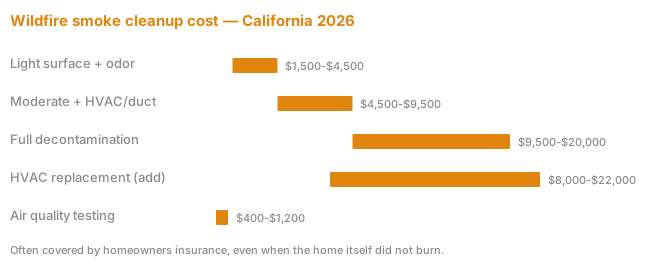
- Light smoke odor + surface cleaning (small home / distant fire): $1,500-$4,500
- Moderate contamination + HVAC and duct cleaning: $4,500-$9,500
- Full decontamination (framing, insulation, HEPA scrubbing, testing): $9,500-$20,000
- HVAC system replacement (if ducts/coils can't be salvaged): add $8,000-$22,000
- Air quality testing (pre + post): $400-$1,200
Good news on cost: wildfire smoke damage is frequently covered under California homeowners insurance, even when your home didn't burn. A certified contractor who documents the damage properly can make the difference between a covered claim and a denied one. Don't let the sticker price stop you from getting a professional assessment - the inspection often pays for itself in the claim.
Home hardening: stop the next fire's embers #
Most homes lost in California wildfires aren't destroyed by a wall of flame - they're ignited by wind-blown embers that land hours ahead of the fire and find a way inside. "Home hardening" is the practice of closing those entry points. While the remediation team is already on site, it's the smart moment to harden.
The highest-impact upgrade: 1/8-inch vent mesh
Embers get sucked into attics and crawlspaces through vents covered with standard 1/4-inch screen - or no screen at all. Replacing them with 1/8-inch noncombustible metal mesh blocks embers while still allowing airflow. It's inexpensive, it's now the California standard for fire-prone zones, and it's one of the single most effective things you can do. See CAL FIRE's home hardening guide for the full checklist.
Other proven home-hardening steps
- Ember-resistant vents (baffled or intumescent) on attic and foundation openings
- Sealing gaps under roof eaves, around pipes, and at roof-to-wall joints
- Class-A fire-rated roofing and noncombustible siding at replacement time
- Clearing the first 5 feet around the home of mulch, plants, and anything flammable (the "ember-resistant zone")
- Tempered or dual-pane glass, which resists cracking under radiant heat
Hardening your home can also improve insurability in high-risk California zones, where carriers increasingly reward mitigation. Ask an expert which upgrades give you the most protection per dollar.
Clean rooms: HEPA air filtration for safe indoor air #
Even with the air outside hazardous and smoke season lengthening across California, you can keep at least one part of your home genuinely safe to breathe. The growing trend among California homeowners is the dedicated "clean room" - usually a bedroom - set up as a refuge during smoke events.
What a clean room takes
- Certified HEPA air purifier(s) sized for the room's square footage - true HEPA captures 99.97% of particles down to 0.3 microns
- Sealed openings - weatherstripping on doors, sealed windows, taped gaps during heavy smoke
- Upgraded HVAC filtration - MERV 13 or higher whole-home filters so the central system stops pulling smoke in (a job for your HVAC pro)
- A portable CO2/air-quality monitor to confirm the room is actually clean
For households with kids, elderly family members, or anyone with asthma or heart conditions, a clean room isn't a luxury - it's the difference between riding out smoke season safely and a trip to the ER. Many HVAC and indoor-air-quality contractors will design one for you. Connect with a local expert to spec the right setup for your home.
How to choose a certified remediation contractor #
After a disaster, out-of-area "storm chasers" flood in. Protect yourself:
- Verify IICRC certification. The Institute of Inspection, Cleaning and Restoration Certification is the industry standard for fire and smoke remediation.
- Confirm a valid CSLB license. California restoration work requires the proper contractor license - check it at the CSLB website before you sign.
- Demand air testing, not just deodorizing. "We'll get rid of the smell" is not remediation. Insist on pre- and post-clearance testing.
- Get the scope in writing. HVAC, ductwork, framing, insulation - named line by line, not "whole-house cleaning."
- Ask about insurance billing. Experienced firms document for your claim and often bill the carrier directly.
- Use a local pro. Local contractors stake their reputation on your neighborhood - and they're still here next year.
Contact a certified local expert →
For contractors: restoration & deep-clean lead context #
Post-wildfire smoke remediation is one of the highest-value lead types in California home services - insurance-funded tickets, urgent timelines, and homeowners who need help fast. For disaster-restoration firms, deep-cleaning services, and HVAC technicians, exclusive territory matters more here than anywhere: when a fire hits, you don't want to be one of seven contractors a shared-lead platform sold the same call to.
- Average remediation ticket: $4,500-$20,000 (higher with HVAC replacement)
- Insurance-funded close rate: typically strong - the homeowner has an active claim
- Demand pattern: seasonal spikes around fire events, year-round indoor-air-quality work between them
- Adjacent verticals we already run: HVAC, indoor air quality, and duct work
If you handle fire and smoke restoration in California and want exclusive inbound calls - one contractor per market, never shared - see our restoration leads page, browse open markets, or read how our model works.