How to get more contractor leads in 2026: 9 channels that actually work
Ask ten contractors how they get leads and you will get ten different answers, most of them based on whatever worked once five years ago. Lead generation in 2026 looks different than it did even two years ago: shared marketplaces have gotten more crowded, Google has changed how local results show up, and the gap between channels that convert and channels that just burn money has widened. This guide ranks the nine channels that actually work for small home-service businesses, with realistic close rates and costs, so you can spend your time and budget where it pays off.
The only metric that matters: cost per closed job #
Before the channels, fix the way you measure them. Most contractors compare lead sources by cost per lead. That number is almost useless on its own. A $40 lead that closes 1 in 10 costs you $400 per job in lead spend. A $200 lead that closes 4 in 10 costs you $500 per job - but you booked four jobs instead of one, with a quarter of the phone time and follow-up.
The metric that actually drives your profit is cost per closed job, and the input that moves it most is close rate. That is why this guide ranks channels by how well they convert, not by how cheap the lead looks on the invoice.
The 9 channels, ranked by how well they convert #
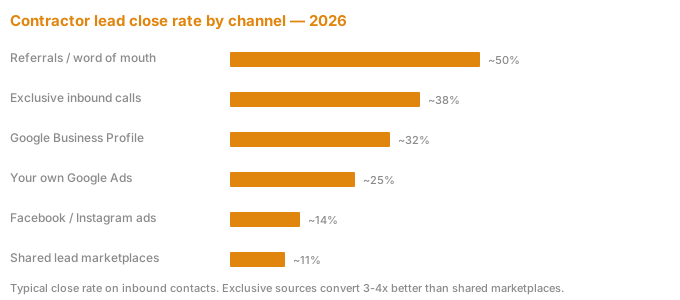
Ranked from highest-converting to lowest. The best mix for most contractors is a couple of channels near the top run consistently - not all nine at once, done badly.
1. Referrals and repeat customers #
Close rate: ~50%. Cost: near zero. Scalability: low.
Nothing converts like a warm referral. The homeowner already trusts you because someone they trust sent them. The catch is you cannot turn referrals up like a faucet - they grow slowly and depend on past work. Make them systematic: ask every satisfied customer for a review and a referral, send a follow-up text a week after the job, and keep a simple list of past customers to remarket to seasonally. Referrals should be your foundation, but they will not fill a calendar by themselves.
2. Exclusive inbound calls from search #
Close rate: 30-45%. Cost: $50-$350 per call or flat monthly. Scalability: high.
An exclusive inbound call is a homeowner who searched Google for your service in your city, found a ranked website, and called - and that call goes only to you. No bidding, no shared lead. Because you are the only contractor on the phone and the homeowner has an active need, these convert nearly as well as referrals, and unlike referrals you can scale them by adding markets.
This is the model we run at Power Your Leads: we build and rank city-specific service websites and route every call to one contractor per territory. If you want to understand the economics, our guide on pay-per-lead vs flat monthly breaks down both pricing models, and what contractor leads should cost in 2026 covers per-vertical benchmarks.
3. Google Business Profile #
Close rate: 25-40%. Cost: free. Scalability: medium.
Your free Google Business Profile is the single highest-ROI thing most contractors ignore. It puts you in the local map pack and Google Maps, where homeowners searching "[service] near me" actually look. It is free, and a well-optimized profile beats a paid ad for trust.
To make it work: fill out every field, pick the right primary category, add real photos of completed jobs, list your service area and hours, and - most important - get reviews consistently. Ask every customer. Respond to every review. A profile with 80 reviews at 4.8 stars will out-pull a competitor with 12, every time. Post updates monthly so the profile looks active.
4. Your own website + local SEO #
Close rate: 25-40%. Cost: build cost + time. Scalability: medium-high.
A fast, clean website that ranks for your service and city earns leads for years after you build it. The fundamentals: a page for each service you offer, a page for each city you serve, real photos, clear calls to action, and a phone number that is easy to tap on mobile. Add structured data, get listed in local directories, and earn a few local backlinks.
Local SEO is slower than paid ads - it takes months to rank - but the cost per lead trends toward zero over time, the opposite of ads. The downside for a busy contractor is that building and ranking a site is a real job in itself, which is exactly why many hire it out or rent exclusive leads from sites someone else ranks.
5. Google Local Services Ads #
Close rate: 20-35%. Cost: pay per lead. Scalability: high.
Google Local Services Ads sit at the very top of search results with the "Google Guaranteed" badge. You pay per lead, not per click, and you only pay for leads relevant to your business (you can dispute junk). The badge requires a background check and license verification, which builds trust. These are shared in the sense that several providers show up, but they convert better than marketplace leads because they come straight from Google search intent. Strong fill-in channel, especially while your organic presence is still growing.
6. Google Search Ads (PPC) #
Close rate: 20-30%. Cost: pay per click, often $8-$50+. Scalability: high.
Traditional search ads put you above the organic results instantly. The upside is speed and control: turn it on today, target exact services and cities. The downside is cost and waste - in competitive home-service markets, clicks are expensive and a lot of budget leaks to tire-kickers and misclicks if the campaign is not tightly managed. PPC works, but it rewards operators who watch it closely or pay someone who does. Treat it as rented traffic: the leads stop the day you stop paying.
7. Facebook and Instagram ads #
Close rate: 10-20%. Cost: pay per click/impression. Scalability: high.
Social ads interrupt people who are not actively searching, so intent is lower and close rates fall. They work best for visual, considered purchases - before/after remodels, epoxy floors, ADUs, solar - where a striking image creates demand. For emergency services (a burst pipe, a dead AC) they are weak, because nobody books a plumber from a Facebook ad while standing in two inches of water. Use social to build awareness and retarget website visitors, not as your primary lead source.
8. Nextdoor and community presence #
Close rate: 20-35% when recommended. Cost: free to low. Scalability: low.
Nextdoor and local community groups behave like referrals at neighborhood scale - a recommendation in a local group carries real weight. Claim your business page, respond helpfully (not spammy) when neighbors ask for recommendations, and encourage happy customers to mention you. It does not scale, and it rewards genuine local reputation over marketing, but for a contractor working a defined area it is a steady trickle of high-trust leads at almost no cost.
9. Shared lead marketplaces #
Close rate: 8-15%. Cost: per shared lead. Scalability: high (but low quality).
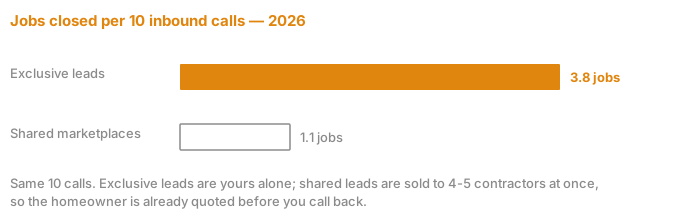
Angi, HomeAdvisor, Thumbtack, and similar platforms sell volume. The structural problem is that the same lead is sold to four or five contractors at once, so by the time you call the homeowner they have already been quoted by competitors and the conversation starts on price. That is why close rates sit at the bottom of the chart. Marketplaces can fill gaps when you are slow, but building a business on them means renting customers who were never really yours. The whole reason exclusive leads cost more per lead is that they cost far less per closed job.
How to pick for your business #
- Start with the free, high-trust channels. Google Business Profile and referrals cost nothing and convert best. If these are not dialed in, fix them before spending a dollar on ads.
- Add one scalable channel. Pick one of exclusive inbound calls, Local Services Ads, or local SEO based on your timeline. Need leads this week? Ads. Building for the long term? SEO or owned/rented ranked sites.
- Measure cost per closed job, not cost per lead. Track every channel to booked revenue. Drop whatever is not paying after a fair test.
- Do not spread thin. Two channels run well beats nine run badly. Master one scalable channel before adding the next.
- Protect your close rate. Answer fast, every time. The contractor who picks up on the first ring wins the job - especially on exclusive leads where you are the only one called.
Bottom line #
The contractors who win in 2026 are not the ones on the most platforms - they are the ones who concentrate on a few high-converting channels and answer the phone. Referrals and Google Business Profile are the free foundation. For predictable, scalable volume, exclusive inbound calls beat every paid alternative on cost per closed job, because you are the only contractor on the line.
That is the entire model behind Power Your Leads: we rank city-specific service websites and send every call to one contractor per market. If you want to see whether your service and city are open, check open markets or read how it works.